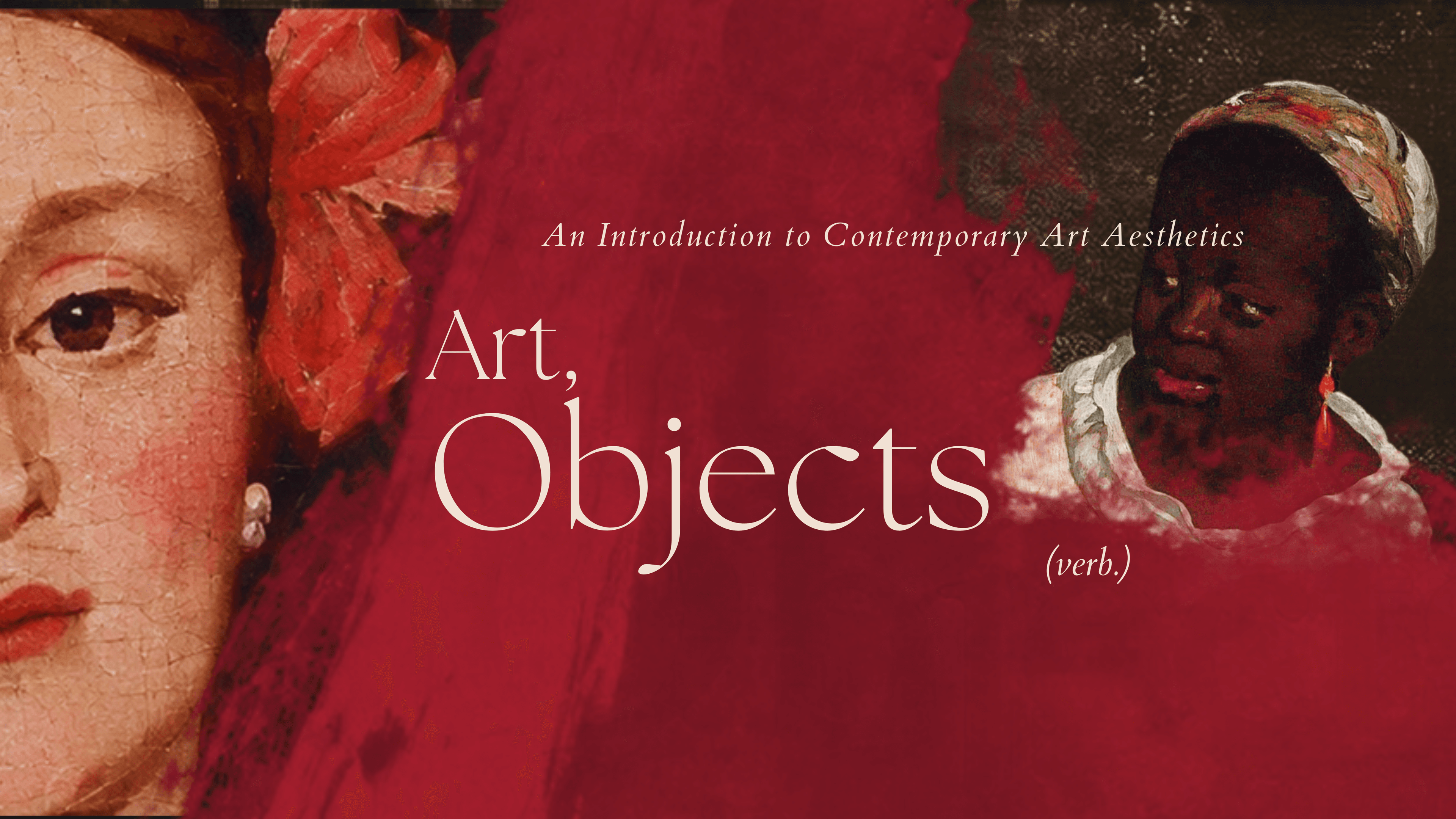
A urinal in a gallery; a painting set on fire mid-exhibition; a black square; a shared table; a person standing in a public square for days, refusing to move. Art is many things at once. In this course, we read contemporary aesthetic theory alongside the practices that have pushed past traditional ideas of medium, form, and the object itself.
Over eight weeks, we shall read and discuss contemporary philosophers, among them Jacques Rancière, Jean-Luc Nancy, Geeta Kapur, Griselda Pollock, Boris Groys and Asta; parallel to the work of contemporary artists, so the ideas are tethered to an actual object of art. We shall move through…
A urinal in a gallery; a painting set on fire mid-exhibition; a black square; a shared table; a person standing in a public square for days, refusing to move. Art is many things at once. In this course, we read contemporary aesthetic theory alongside the practices that have pushed past traditional ideas of medium, form, and the object itself.
Over eight weeks, we shall read and discuss contemporary philosophers, among them Jacques Rancière, Jean-Luc Nancy, Geeta Kapur, Griselda Pollock, Boris Groys and Asta; parallel to the work of contemporary artists, so the ideas are tethered to an actual object of art. We shall move through discourses like the post-structural, phenomenological, feminist, and socio-political perspectives to engage with contemporary aesthetic cultures, both from their theoretical and practical groundwork.
By the end, you’ll have a working vocabulary for talking about contemporary art while developing your own imagination of art in the world through eight weeks of reading, writing and conversation.
Just as art itself, the course too, is interdisciplinary in spirit. It could be of wide interest to anyone interested in art, art history, philosophy and aesthetics.
We meet online, once a week, over Google Meet or Zoom for about 90 minutes each time. The first half is a lecture and the second half opens the room to discuss the ideas and readings of the week.
Writing & Discussion
Each week, by Wednesday, you shall write a short reflection (about 150 words) on assigned readings in the shared course space. This reflection could take any form it needs to; a question, a connection, an observation, or a refutation. You shall also read and respond to what others have written. This allows conversations to move beyond live sessions and continue through the week.
Week by Week
Gender, class, caste, and race; do these categories find a reckoning in contemporary arts praxis? We open with artists whose work makes this reckoning unavoidable as they push the traditional constructs of fine arts and objects to make room for newer ways of engaging with the world. Using Asta’s theory of conferralism as a lens, we look at the works of Pipiloti Rist, Kara Walker, and dismantle the myths around art and its objects.
Two months of live lectures and dialogic discussion | Small cohort of 18 (Approx) participants | Curated reading material | The Final Symposium | Alumni Network Membership | Certificate of Completion*
Everything in the Seminar Track | Two 1-on-1 individual mentorship sessions with the faculty | Personalised reading recommendations.
III. Bursary
We offer a limited number of bursaries for those who cannot afford the course fee but are keenly interested in joining us. If you would like to apply for a bursary, please write to us at contact@liberalartscentre.org with the following: (a) a brief personal statement (300-500 words) on why you want to do this course and what draws you to the subject (b) a short note on your financial circumstances and why the fee is a barrier for you at this time.
You are welcome to also share (c) a piece of writing or work you are proud of - an essay, an article, a blog post, anything at all - so we can get a sense of who you are. We review bursary applications on a rolling basis and will get back to you as soon as we can.