The world is less free than it was even a couple of decades ago. This isn’t a phenomenon confined to one country; political parties nearly everywhere are willing to stoke hatred against minorities and are seeking power in order to institutionalise division and discrimination, inventing new propaganda techniques to cultivate exclusionary narratives as they go. Set against this, the political world of the late twentieth century looks almost like a golden age of individual freedom, rights and international cooperation.
We may not fully understand the reasons, mechanics or the destination of the current descent into unfreedom; not at least until enough time has passed to…
The world is less free than it was even a couple of decades ago. This isn’t a phenomenon confined to one country; political parties nearly everywhere are willing to stoke hatred against minorities and are seeking power in order to institutionalise division and discrimination, inventing new propaganda techniques to cultivate exclusionary narratives as they go. Set against this, the political world of the late twentieth century looks almost like a golden age of individual freedom, rights and international cooperation.
We may not fully understand the reasons, mechanics or the destination of the current descent into unfreedom; not at least until enough time has passed to interpret it clearly. However, we can still learn from earlier instances of people being seduced into the grip of totalitarian regimes, and that’s what this course sets out to do.
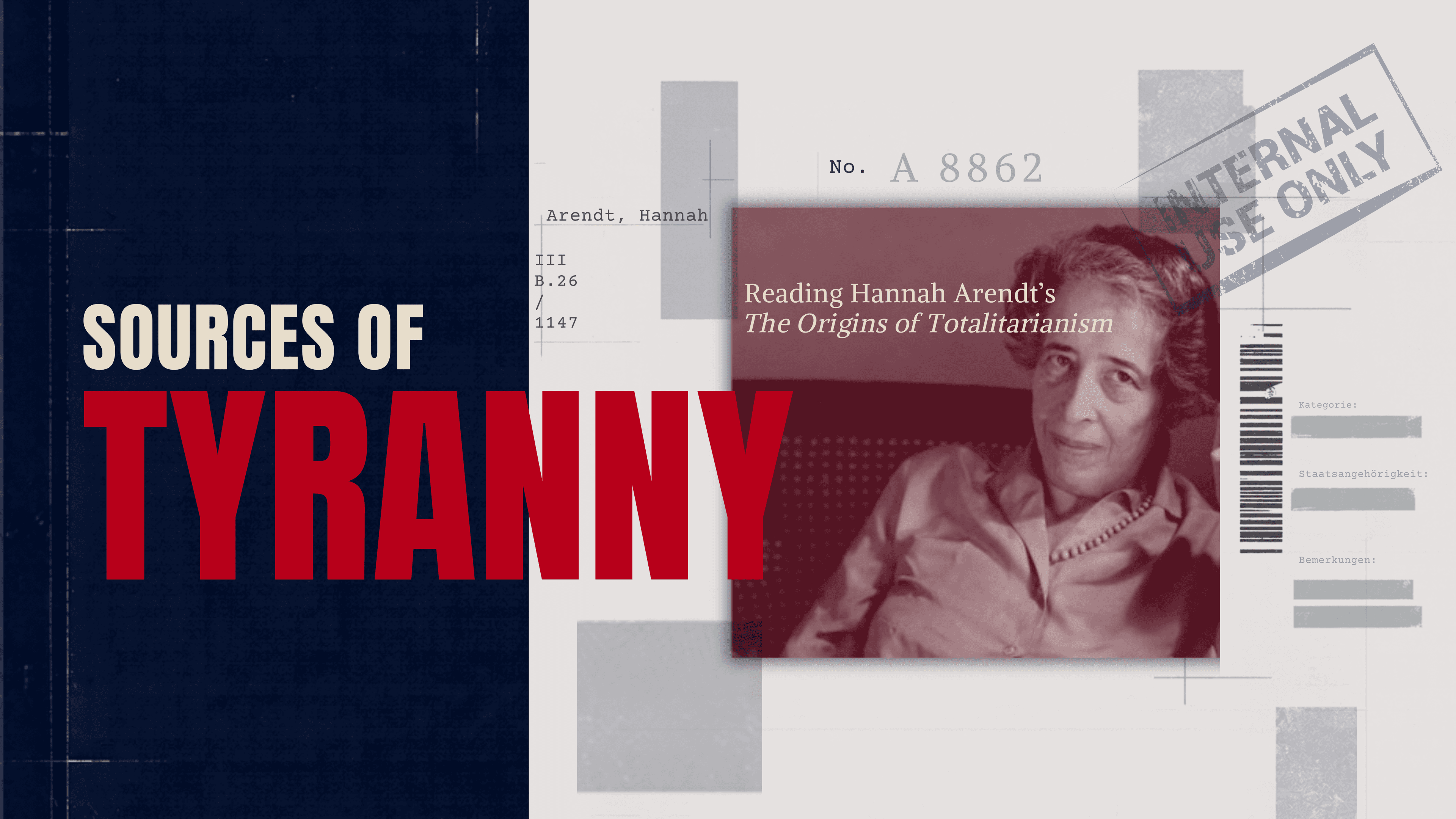
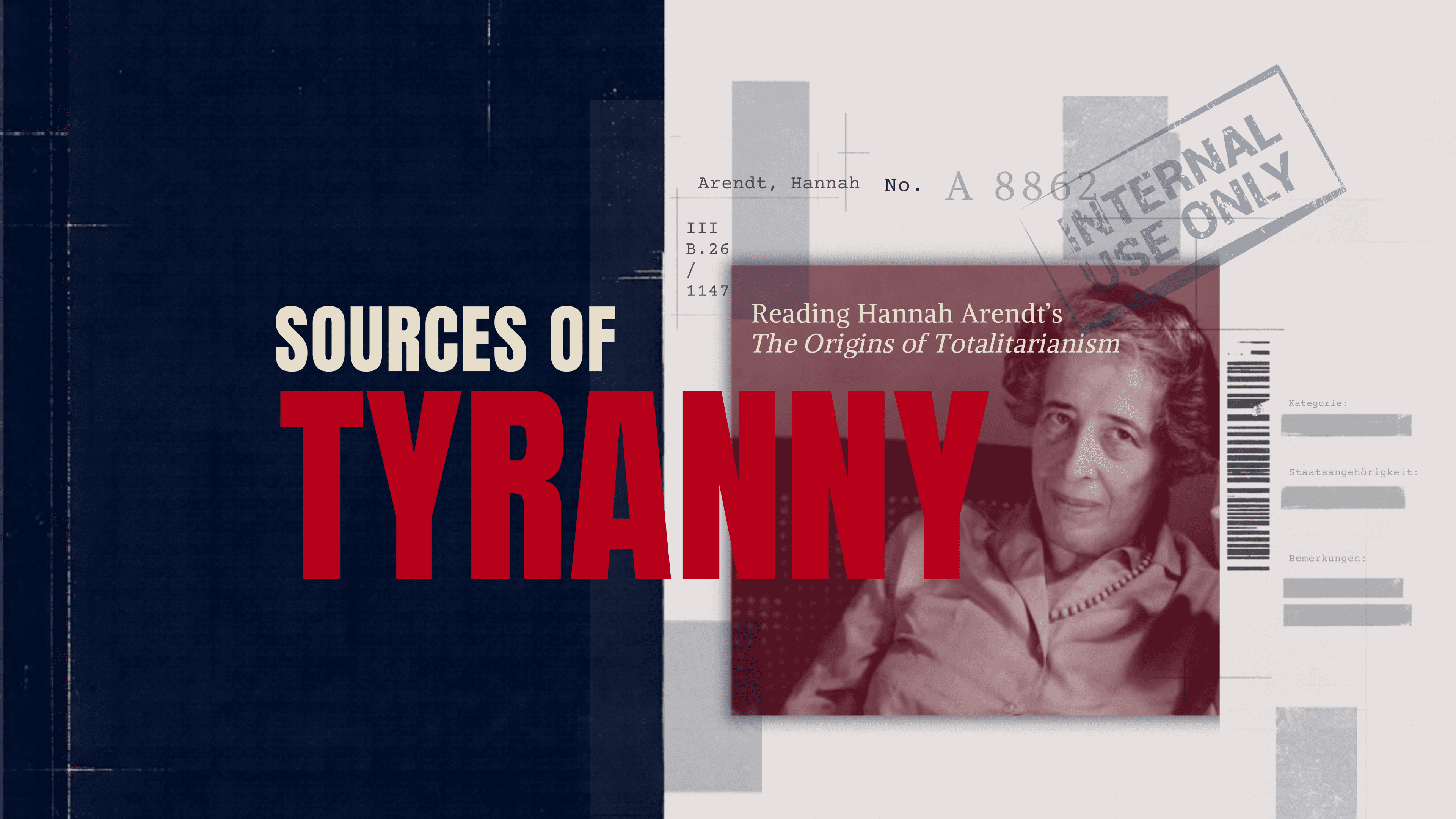
Through eight weeks, we do a close and collective reading of Hannah Arendt’s The Origins of Totalitarianism. Arendt, one of the most significant philosophical voices of the twentieth century, analyses how her own country descended into mass hatred and a kind of collective unthinking.
Written in the years just after the Second World War, as the documents from German archives were first emerging, Arendt traces the path to mass incarceration, deportation and a world war. We shall also read a short excerpt from Arendt’s later, more philosophical work, The Human Condition, which grew directly out of the political reality described in The Origins.
Each week takes up a specific section, which shall be assigned in advance. The goal isn’t to discover a pre-given answer, but to use the nuances of a different historical moment to sharpen our interpretation of our own political and cultural condition. Participants should be able to commit to 40-50 pages of reading a week.
Each weekly session is held live (a Google Meet or Zoom link is shared with course participants). Sessions run about 90 minutes and are divided into two parts: a lecture from the faculty, followed by an open discussion among participants and faculty in an exploratory, collaborative setting.
Writing & Discussion
By Wednesday each week, participants write a short reflection (about 150 words) on that week’s readings, posted to the shared course space. It may take any form: a question, a connection, an observation, a refutation. You shall also read and respond to reflections shared by others in the cohort, so the conversation continues through the week, beyond the sessions.
Two months of live lectures and dialogic discussion | Small cohort of 18 (Approx) participants | Curated reading material | The Final Symposium | Alumni Network Membership | Certificate of Completion*
Everything in the Seminar Track | Two 1-on-1 individual mentorship sessions with the faculty | Personalised reading recommendations.
III. Bursary
We offer a limited number of bursaries for those who cannot afford the course fee but are keenly interested in joining us. If you would like to apply for a bursary, please write to us at contact@liberalartscentre.org with the following: (a) a brief personal statement (300-500 words) on why you want to do this course and what draws you to the subject (b) a short note on your financial circumstances and why the fee is a barrier for you at this time.
You are welcome to also share (c) a piece of writing or work you are proud of - an essay, an article, a blog post, anything at all - so we can get a sense of who you are. We review bursary applications on a rolling basis and will get back to you as soon as we can.